
1. Ponding Water
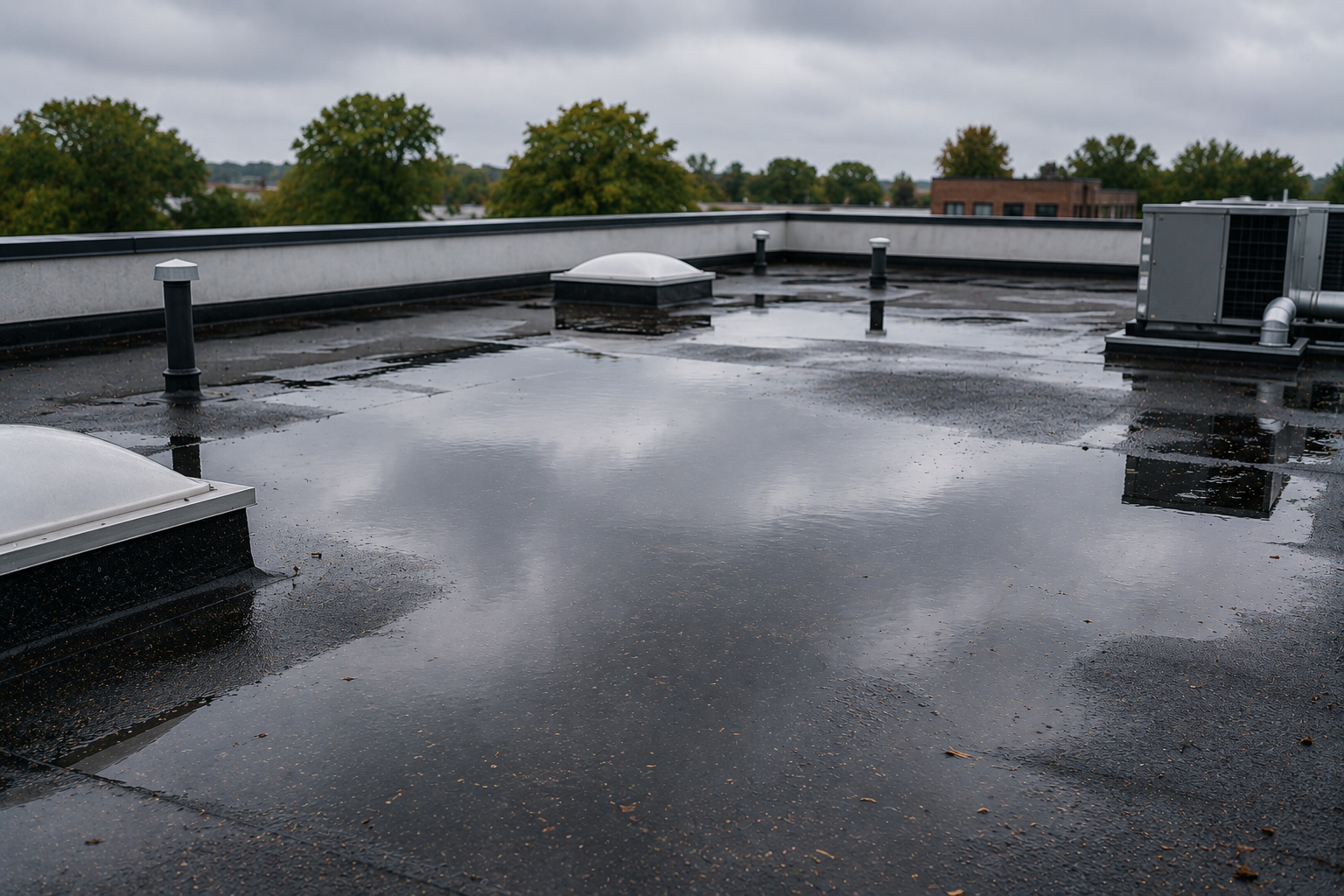
One of the most common flat roof issues in Ireland is ponding water. Unlike pitched roofs, flat roofs drain water more slowly, making them vulnerable to standing water after heavy rainfall.
If water remains on the roof surface for extended periods, it can accelerate wear, weaken roofing materials and increase the risk of leaks.
- Blocked drainage outlets
- Poor roof falls
- Structural settlement
- Damaged drainage systems
2. Flat Roof Leaks
Leaks are one of the most frequently reported flat roofing problems. Water can enter through cracks, damaged membranes, failed joints or deteriorated flashing.
Even small leaks should be addressed quickly, as prolonged water ingress can damage insulation, ceilings and internal structures.
- Membrane damage
- Failed seals and joints
- Damaged flashing
- Weather-related deterioration
3. Cracked or Damaged Roofing Membranes
Over time, flat roofing membranes can deteriorate due to weather exposure, UV radiation and temperature fluctuations. Cracks and splits allow water to penetrate the roofing system and cause further damage.
Regular inspections can identify membrane defects before they become major repair issues.

4. Flashing Failures
Flashing is designed to seal vulnerable areas where the roof meets walls, chimneys, skylights and other structures. Damaged or poorly installed flashing can create entry points for water.
Flashing problems are a common cause of leaks on flat roofs throughout Ireland.
5. Storm Damage
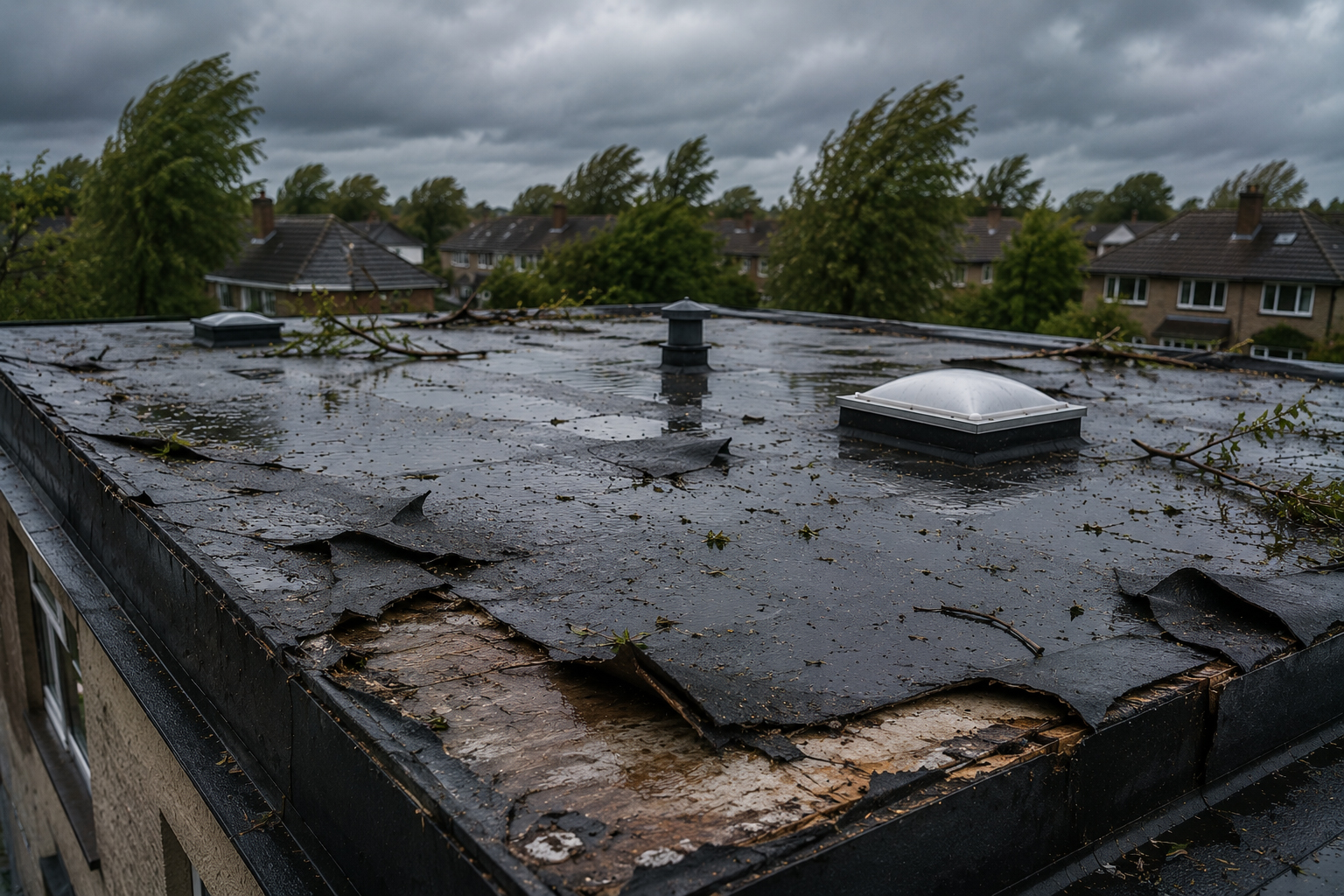
Ireland's weather can place significant stress on flat roofing systems. High winds, heavy rain and storms can loosen materials, damage flashing and expose weak points in the roof structure.
Following severe weather, it is advisable to arrange a professional roof inspection to identify any hidden damage.
6. Blocked Gutters and Drainage Systems
Flat roofs rely heavily on effective drainage systems. Blocked gutters, downpipes and outlets can cause water to back up and accumulate on the roof surface.
Routine maintenance helps ensure rainwater can drain freely and reduces the likelihood of ponding water.
- Remove leaves and debris
- Inspect drainage outlets regularly
- Check downpipes for blockages
- Arrange routine roof maintenance
How to Prevent Flat Roof Problems
Preventative maintenance is the most effective way to reduce the risk of costly flat roof repairs.
- Arrange regular roof inspections
- Address minor defects promptly
- Maintain drainage systems
- Inspect roofs after storms
- Repair damaged flashing quickly
- Keep roofing surfaces clear of debris

When Should a Flat Roof Be Replaced?
While many flat roof problems can be repaired, extensive deterioration or repeated leaks may indicate that replacement is the most cost-effective long-term solution.
A professional roofing inspection can determine whether repairs or replacement are the best option for your property.
Related Roofing Services
- Flat Roofing Dublin
- Roof Repairs Dublin
- Emergency Roof Repairs Dublin
- Guttering, Fascia & Soffits Dublin
Frequently Asked Questions
Why does water pool on flat roofs?
Water pooling is usually caused by poor drainage, blocked outlets or insufficient roof falls.
Can a leaking flat roof be repaired?
Yes. Many flat roof leaks can be repaired if identified early and addressed by a professional roofing contractor.
How often should a flat roof be inspected?
Flat roofs should be inspected regularly and after severe weather events to identify potential issues before they become major problems.
Need Help With a Flat Roof?
If you are experiencing flat roof problems or require a professional inspection, Sandyford Roofing can provide expert advice and roofing solutions throughout Dublin.